

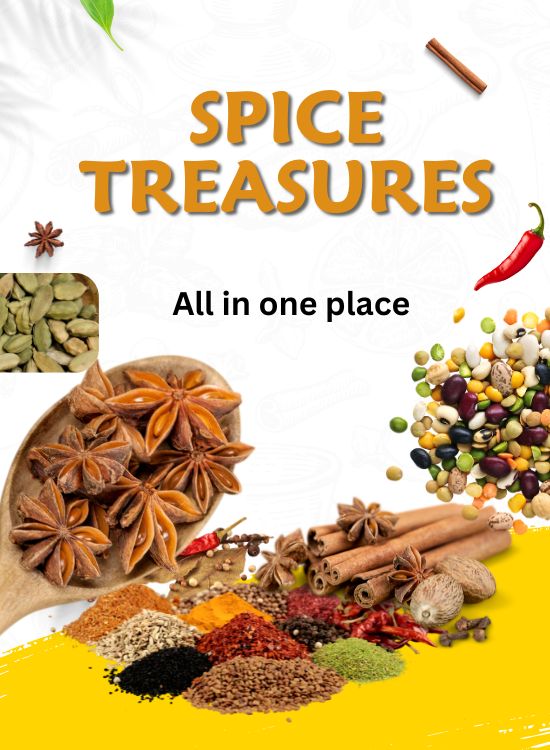
🌶️ Some important Asian spices
- Turmeric — earthy, slightly bitter, and bright yellow; central to many Indian and South Asian dishes.
- Cumin — warm, nutty, and aromatic; common in Indian, Middle Eastern and Central Asian cooking.
- Coriander seed — citrusy and gently sweet; used extensively across South and Southeast Asia.
- Cardamom — fragrant, sweet, and floral; used in curries, rice dishes, tea, and desserts.
- Cinnamon — warm and sweet, but also used in savoury curries and meat dishes.
- Star anise — intensely aromatic, with a liquorice-like flavour; particularly associated with Chinese cooking.
- Sichuan pepper — citrusy and tingling rather than simply “hot”; famous for the numbing sensation in Sichuan cuisine.
- Cloves — powerful, warm, and slightly sweet; used in spice blends, rice dishes and drinks.
- Galangal — peppery, citrusy and sharper than ginger; important in Thai and Indonesian cooking.
- Dried chillies — range from mildly fruity to intensely hot and are fundamental throughout Asia.
- Fenugreek — slightly bitter and maple-like; particularly important in South Asian spice blends.
- Mustard seeds — pungent and nutty when cooked; widely used in South Asian cuisines.
🌏 Different regions, different personalities
South Asia: turmeric, cumin, coriander, cardamom, cloves, fenugreek, mustard seed and chilli dominate many spice combinations.
East Asia: star anise, Sichuan pepper, ginger, cassia, dried chilli and five-spice blends are particularly important.
Southeast Asia: spices often combine with fresh aromatics such as lemongrass, galangal, ginger, garlic, chilli and kaffir lime.
Japan and Korea: spice use tends to be different from Indian-style cooking. Japanese shichimi togarashi combines chilli with ingredients such as sansho, sesame and citrus peel, while Korean cuisine makes extensive use of chilli flakes and fermented seasonings.
One fascinating thing about Asian cooking is that the same spice can taste completely different depending on how it’s treated—toasting cumin, blooming mustard seeds in oil, or grinding Sichuan pepper just before use can dramatically change its aroma and flavour.